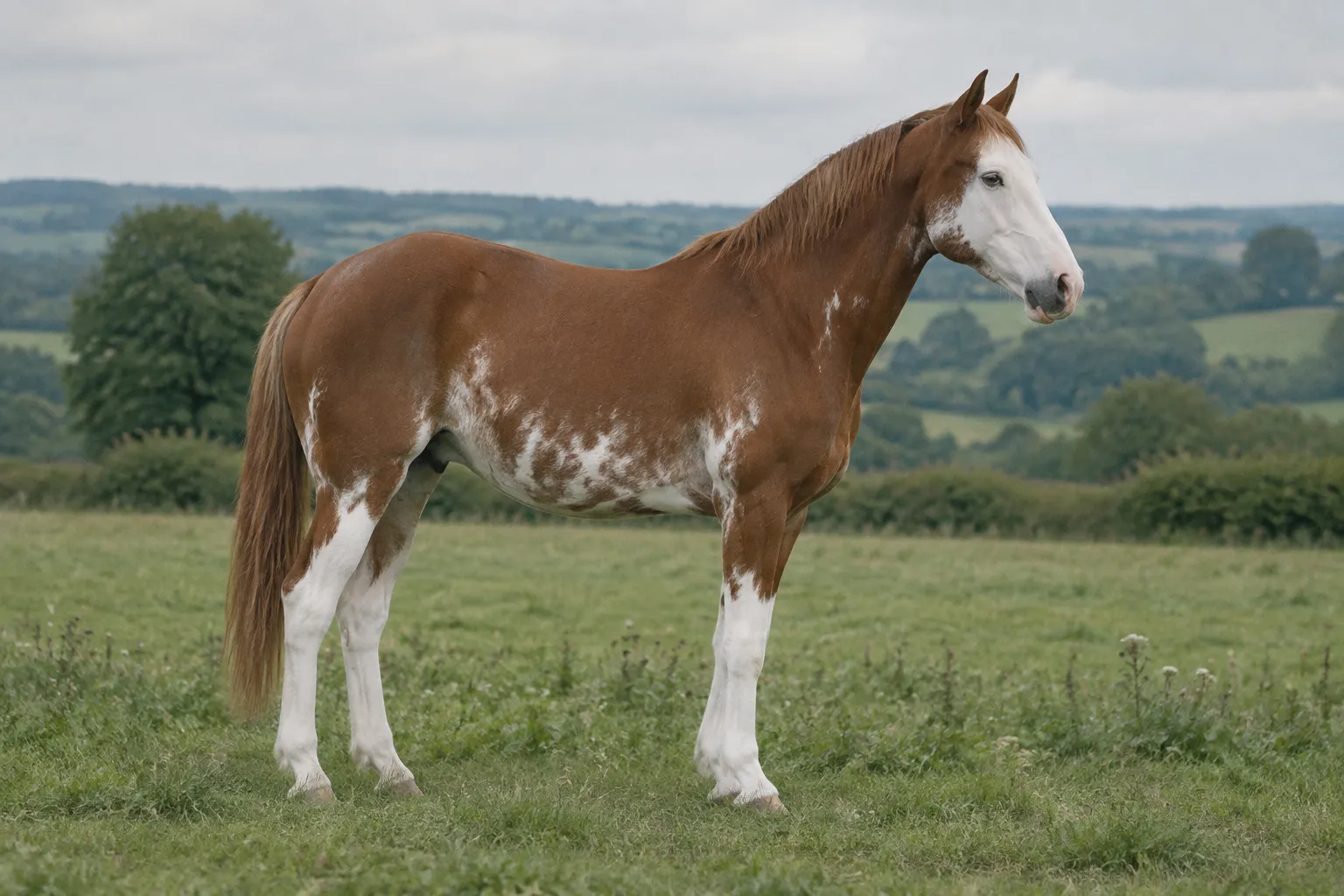
Piebald or skewbald: what is the difference?
Piebald is black and white. Skewbald is white with any other colour: brown, red, bay or chestnut.
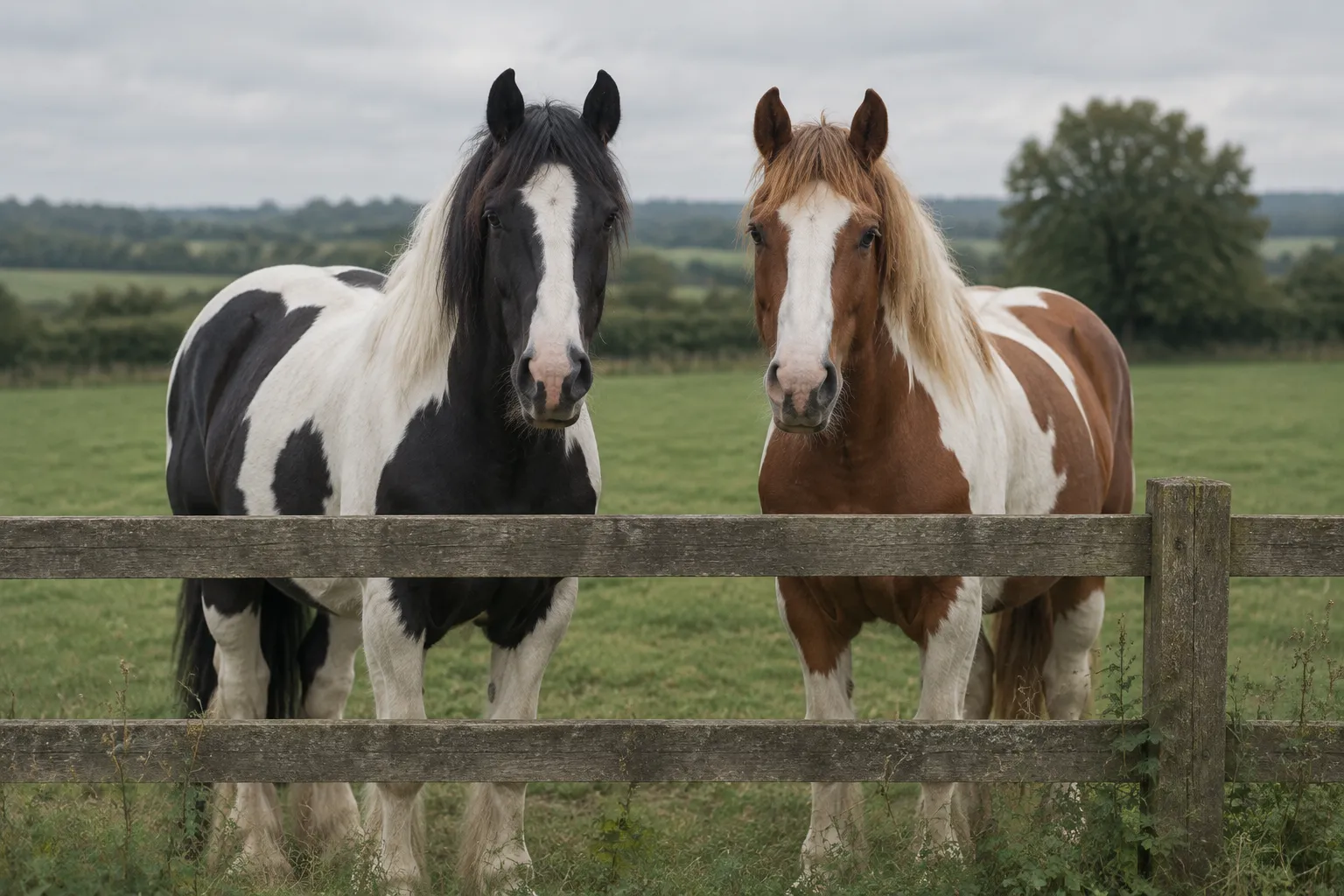
Piebald is black and white. Skewbald is white with any other colour. That’s the whole distinction, and it’s the reason the British registry splits coloured horses exactly two ways.
Collins English Dictionary gives piebald as “marked or spotted in two different colours, esp black and white”, and as a noun, “a black-and-white pied horse”. The word is sixteenth century, from pie as in magpie.
Skewbald is the older-sounding one and the better documented. The Yorkshire Historical Dictionary, compiled at the University of York, defines it as “irregularly marked with white and brown or red, or some similar colour, used especially of horses”, and cites Adam Eyre’s diary of 1647: “This morne I rid on Scueball to Carlecoates” — a Yorkshireman riding a horse named for its own colour, nearly four centuries ago.
The society definition follows the same split, describing a coloured horse as “white and black or white and… any other colour, bay, roan, chestnut”. Bay itself is a distribution of black pigment rather than a shade of brown. More on what qualifies is in what makes a horse coloured, and the traditional cob is where these markings live: see the cob.