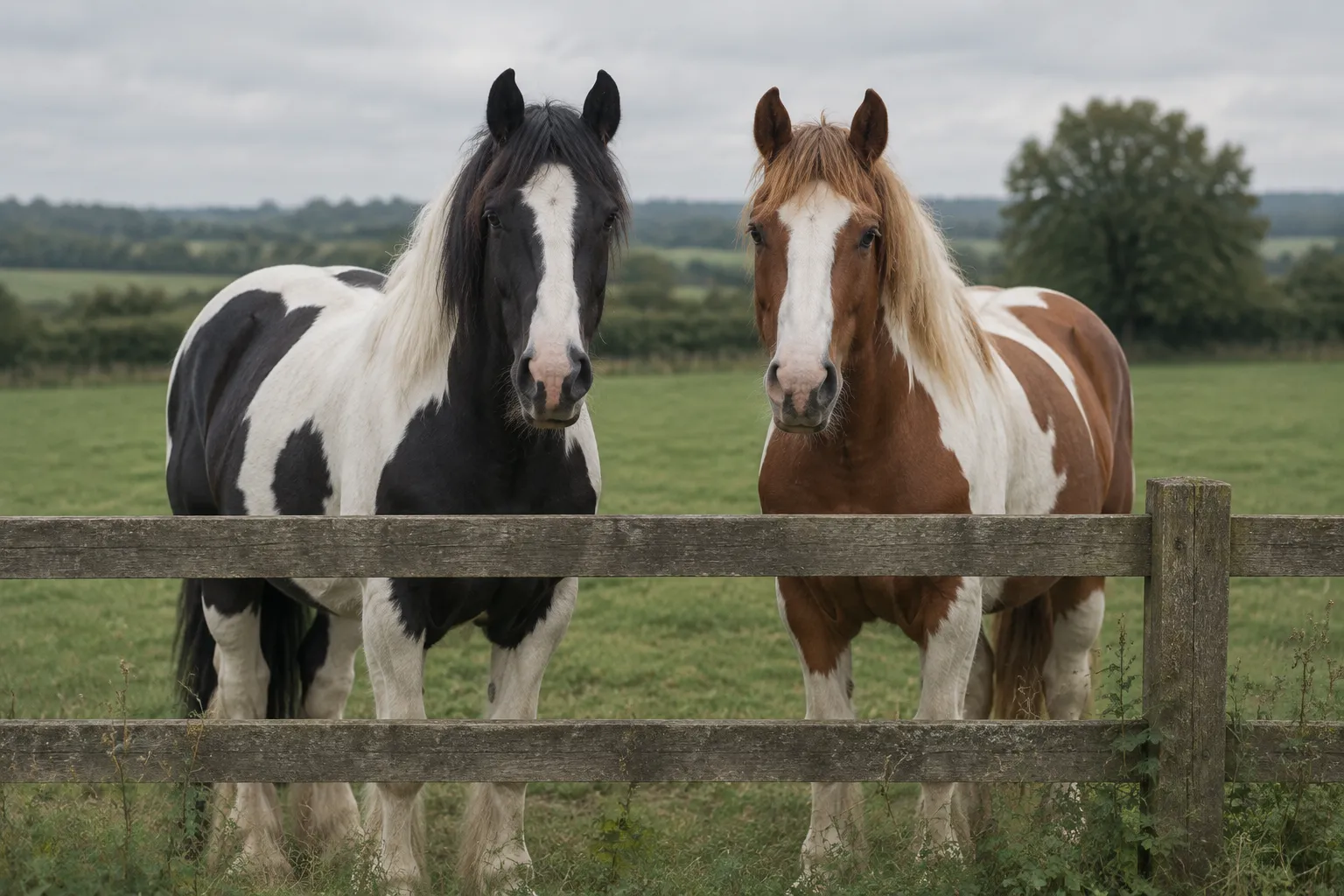
What is a coloured horse?
"Coloured" is the British word for a horse marked in white and one other colour, and it has a registry definition behind it.
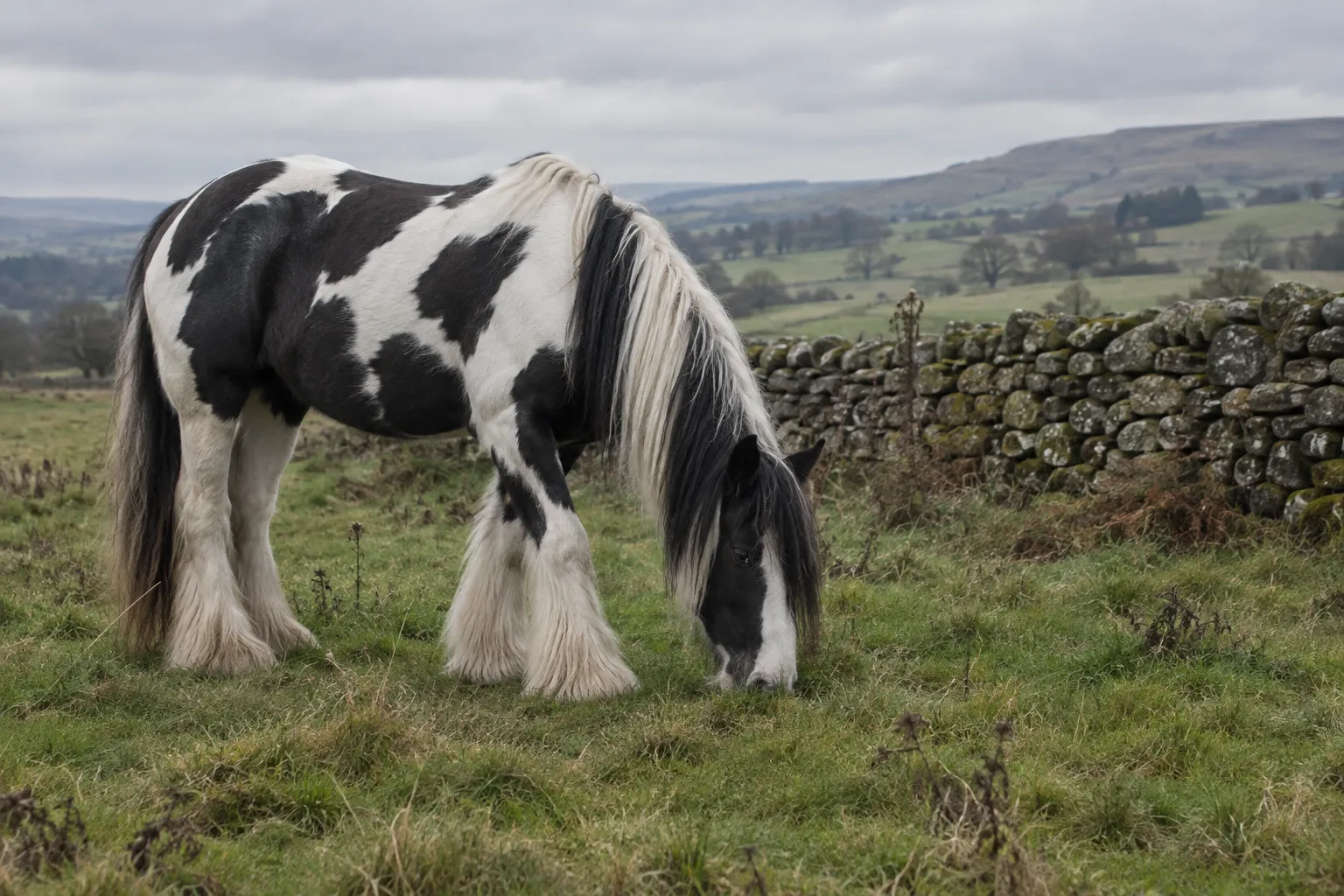
“Coloured” is the British word for a horse marked in white and one other colour, and unlike most colour words it has a registry definition behind it. That’s unusual: most coat-colour words are description, not definition. CHAPS (UK), the Coloured Horse and Pony Society, is a DEFRA-approved studbook and passport issuing organisation founded in 1983, and its About page says it has registered over 20,000 horses and ponies.
Their handbook sets the test: a coloured horse or pony is one “whose coat colour is either white and black or white and… any other colour, bay, roan, chestnut; with a patch of naturally occurring white above the level of the stifle or e.g. elbow, excluding any face markings”. Manes and tails may be white or part-white. Appaloosas, and animals whose only white is on the belly, don’t qualify.
That placement rule is the part people miss. Four white socks and a blaze don’t make a horse coloured; the white has to be up on the body. The society also notes horses that are “genetically coloured” without showing enough white, which DNA testing can confirm.
Within that, the two traditional words are piebald and skewbald, and one particular pattern is called a blagdon. A portrait is made from your own photograph.