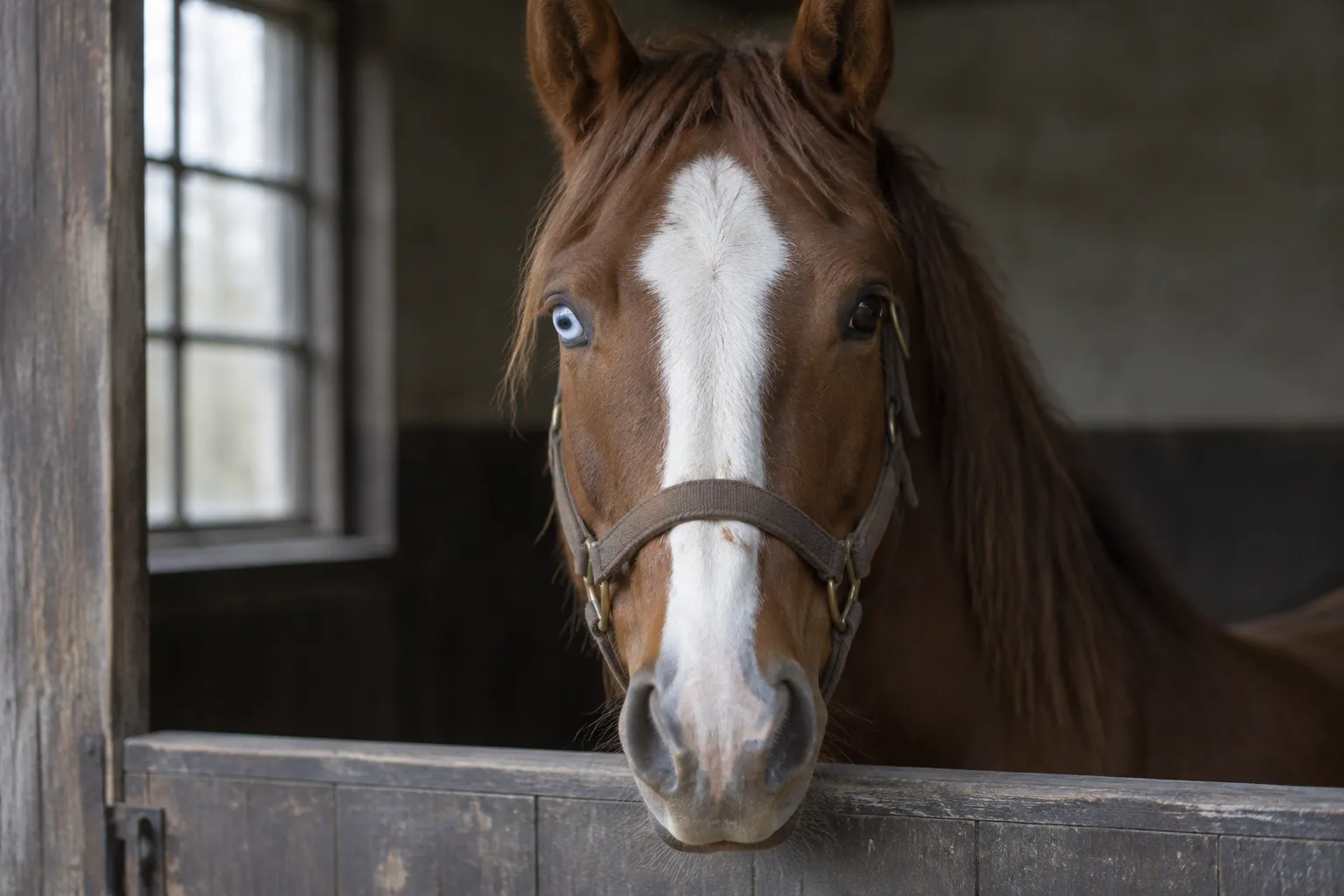
What is a blagdon horse?
Blagdon is the British name for the pattern known elsewhere as sabino: irregular splashes of white, often roaned at the edges.
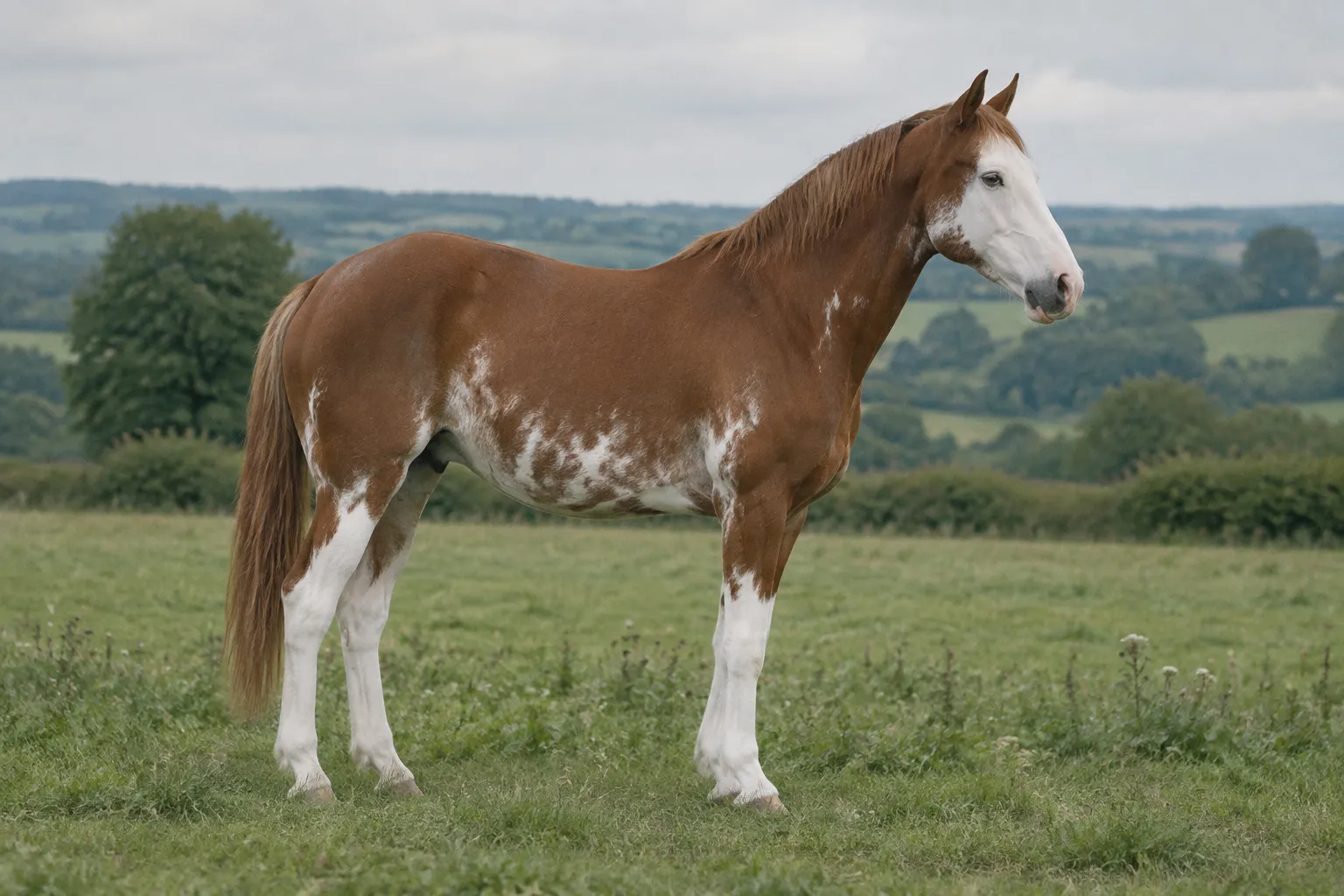
Blagdon is the British name for the pattern known internationally as sabino. If you’ve seen the two words used as though they were different things, they aren’t. The CHAPS (UK) handbook lists it under both names at once — “SABINO (Sa-bee-no) aka Blagdon” — and defines it as “the generic description for a group of white splash patches of irregular shape, on the body, legs, belly and face; often with extensive roaning”.
Two details separate it from the other coloured patterns. The edges are soft: “the outer edges of the white patches can be roaned”, so white blurs into colour rather than stopping at a line. And the amount varies enormously — the society describes markings ranging “from minimal to loud”, from as little as white on the chin or lower lip to a horse that’s entirely white.
That minimal end is why the word is useful. A horse with a bold face, high white legs and a belly splash may be a blagdon rather than a well-marked bay, and it’s often the pattern people are describing when they say a horse is “nearly coloured”.
The neighbouring terms are piebald and skewbald, and the qualifying rules are in what makes a horse coloured. Blagdon belongs to the same set of old British colour words as wall-eyed, which describes a pale or odd eye rather than a coat.